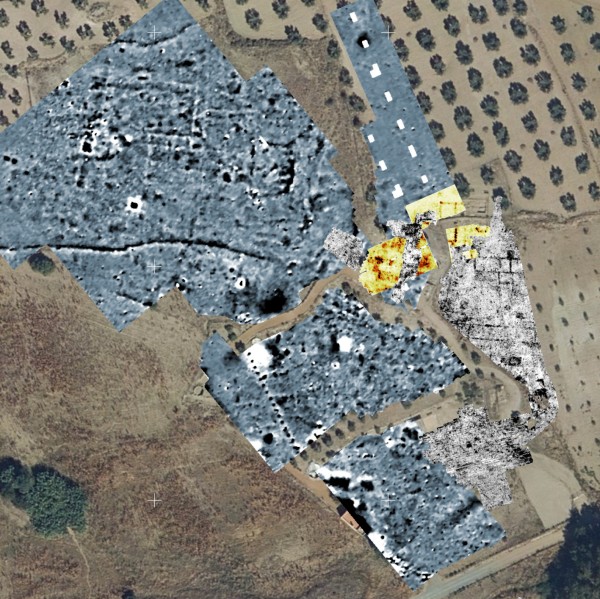
The archaeological site of Guarrazar is internationally known for the discovery of the famous Visigothic treasure in 1858, including votive crowns and crosses. Recent excavations, however, have greatly expanded knowledge of the site’s layout and development. Research since 2013 has confirmed the presence of at least two monumental buildings from the Visigothic period, including a church and a neighbouring structure that may have belonged to a monastic complex, located southwest of Toledo.
The first geophysical investigations were carried out in 2002 and 2005, when a large part of the site was covered by magnetic measurements. The georadar campaign of 2021 aimed to collect more detailed data in the central part of the site and around the discovered basilica.
Stratigraphic evidence also reveals later use during the Islamic period, when parts of the earlier buildings were dismantled for stone reuse. The ongoing project aims not only to advance archaeological research but also to develop the site for educational and tourism purposes in the coming years.
See also: Rojas, J., Eger, C., Catalán, R., & García Vacas, L. (2017). Wo einst goldene Kronen und Kreuze verborgen wurden. Neue Ausgrabungen in Guarrazar. Vorbericht zu den Kampagnen 2013 und 2014. Oppidum-Civitas-Urbs. Städteforschung auf der Iberischen Halbinsel zwischen Rom und al-Andalus, Berlín.